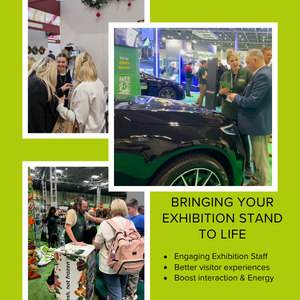
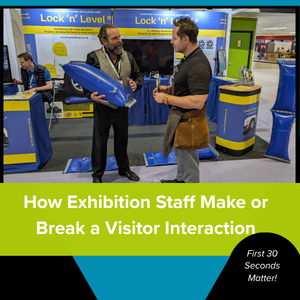
Why Exhibitions Still Matter: Creating an Experience People Actually Remember Exhibitions have changed. Visitors no…
How to Attract More Visitors to Your Exhibition Stand
Preview: Attracting people to an exhibition stand isn’t really about having the biggest screen, brightest graphics or the most expensive giveaway. Visitors are surrounded by hundreds of competing messages, so the stands that perform well make it immediately clear why somebody should stop, give them an easy way to engage and have the right people ready to start a useful conversation. In this article, we look at what attracts visitors at trade shows, why some stands are busy while others are overlooked and how exhibitors can turn passing footfall into worthwhile engagement.
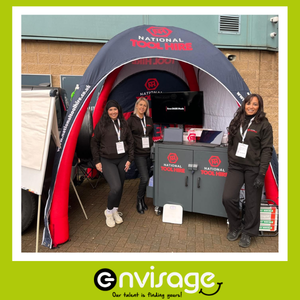
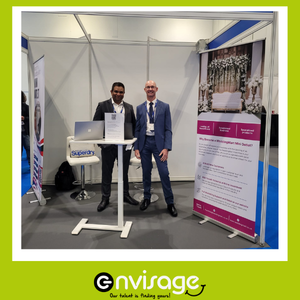
Walk through a busy exhibition hall at the NEC, ExCeL London or almost any major UK trade show and you will notice something quite quickly. Some stands seem to have a constant flow of visitors while others, sometimes only a few metres away, struggle to persuade anybody to stop.
It is tempting to assume that the difference is simply budget, stand size or the strength of the brand name, but that is rarely the whole story.
We work at exhibitions and trade shows around the UK throughout the year, providing staff for stands ranging from relatively small exhibitor spaces to much larger brand activations, and the same principles tend to appear again and again. Visitors stop when something feels relevant, accessible and worth their time, while they walk past when they cannot immediately understand what is being offered or when approaching the stand feels uncomfortable.
That means attracting visitors is part of the overall exhibition strategy instead of a last-minute exercise in finding a competition or giveaway.
Understand Why Exhibition Visitors Walk Past Stands
Before thinking about how to attract someone to your stand, it is useful to consider why they might walk past in the first place.
Trade show visitors are rarely wandering around with unlimited time. Many arrive with a list of suppliers to see, seminars to attend, colleagues to meet and specific problems they want to solve, while others may only have a few hours to cover a very large exhibition hall.
They are constantly deciding which stands deserve their attention.
If a visitor cannot work out what you do within a few seconds, there is little reason for them to slow down. If your team looks busy talking to one another, they may assume nobody is available to help them, while a staff member standing at the very edge of the aisle waiting to launch into a sales pitch can create the opposite problem.
The first aim therefore is not necessarily to make everybody stop. It is to make the right people feel that stopping would be worthwhile.
That distinction is important because a crowded stand does not automatically mean a successful exhibition.
Make It Obvious What Your Business Does
One of the simplest improvements an exhibitor can make is also one of the most frequently overlooked, which is making sure the purpose of the stand is immediately understandable.
Exhibitors know their own business so well that it can be difficult to view the stand through the eyes of somebody seeing the company for the first time. A logo, corporate strapline and several product images might look perfectly clear internally, yet tell a new visitor very little.
Your main message needs to work from the aisle.
Someone passing should be able to get a reasonably good idea of what you offer without stepping onto the stand or asking for an explanation first. That does not mean covering every surface with text, because too much information is just as difficult to process as too little.
A clear statement about what you provide, the market you serve or the problem you solve is usually far more effective than a clever headline that needs explanation.
The test is simple. Stand several metres away and look at the space as though you have never heard of the company before. If you would struggle to explain what the exhibitor does, the visitor probably will too.
Give Visitors a Reason to Pause
Being understood is the first challenge, but the next is giving people a reason to slow down.
This is where demonstrations, activities and interactive elements can be extremely useful, provided they have some relevance to what you are trying to achieve.
Years ago, exhibition advice often focused heavily on novelty attractions. Prize wheels, photo booths, sweets, coffee machines and promotional giveaways were treated as reliable ways of creating a crowd, and they can certainly still attract attention.
The difficulty is that attention on its own is not particularly valuable.
If fifty people stop because they want a free coffee and none of them has any interest in your service, the stand may look busy while delivering very little commercially.
A stronger attraction gives the visitor something useful as well as something interesting. Product demonstrations, tastings, trials, comparisons, short consultations and practical challenges can all work because the visitor is engaging with the business itself.
Ideally, the attraction should make the first conversation easier rather than distract from it.
Think Carefully About Exhibition Giveaways
Giveaways remain part of many exhibitions, and there is nothing wrong with them when they are used with some thought.
The question to ask is what you want the giveaway to achieve.
If the aim is general brand awareness, a useful branded item may continue to put the company name in front of the visitor after the event. If the aim is lead generation, you might connect a prize draw to a genuine expression of interest, while samples can work particularly well when the product itself is something people can experience.
The problems usually begin when the giveaway becomes the main attraction, and the business becomes secondary.
Experienced exhibition visitors become very good at spotting free merchandise from a distance, which means you can easily create a queue of people who have no real intention of speaking to you.
There is nothing wrong with a bit of fun, but make sure your team knows how to turn that moment into a conversation rather than simply handing out an item and watching the visitor disappear into the crowd.
Use Your Exhibition Staff Properly
You can invest heavily in the stand, graphics and technology, but ultimately it is the people working there who determine how welcoming it feels.
We see this constantly when working at trade shows at venues such as the NEC and ExCeL, where thousands of visitors pass stands during the course of a day. Visitors notice staff behaviour almost immediately, even if they do not consciously realise they are doing it.
A team grouped together in the middle of the stand can unintentionally create a barrier. Staff looking down at phones suggest they are unavailable, while somebody sitting behind a desk waiting for visitors to approach places all of the responsibility on the attendee.
At the other extreme, aggressively approaching everybody walking along the aisle can make people deliberately avoid the stand.
Good exhibition engagement sits somewhere in between.
Staff should appear available, interested and comfortable speaking to strangers, with enough understanding of the business to begin a conversation naturally. They should also know how to recognise when a visitor needs a more experienced member of the sales or technical team.
A useful opening question will almost always work better than immediately launching into a prepared pitch.
Brief Your Exhibition Team Before the Doors Open
One of the biggest differences between an average exhibition team and an effective one often comes down to the briefing.
Everybody working on the stand should understand what the business wants to achieve from the event, because attracting visitors is much easier when the team knows which visitors they actually want.
That means discussing the target audience, the key services or products being promoted, any demonstrations taking place, common visitor questions and the process for capturing information.
Temporary exhibition staff should also know who the internal specialists are and when a visitor should be handed over.
A good brief does not need to turn every member of the team into a technical expert, but it should give them enough confidence to hold the first conversation without constantly looking for somebody else to answer basic questions.
Visitors can tell when a team is well prepared.
Create Activity on the Stand
People are naturally interested in places where something is happening.
A completely empty stand can sometimes be difficult to approach because the visitor knows that every member of staff will immediately notice them, whereas a little activity makes the environment feel easier to enter.
This does not mean manufacturing a crowd for the sake of appearance. Instead, think about ways of creating natural movement and interaction.
Live demonstrations are particularly effective because they provide a clear reason for someone to stop and watch without immediately committing to a sales conversation. Short talks, product trials and scheduled demonstrations can achieve a similar effect.
If you are planning live activity, make sure it is positioned where passing visitors can actually see it. There is little benefit in running an excellent demonstration at the back of a stand where only people who have already entered the space know it is happening.
Do Not Forget the Visitor Experience
Exhibition days are tiring.
Visitors can spend hours walking through large venues, carrying bags, concentrating on presentations and speaking to dozens of businesses. A stand that feels welcoming and uncomplicated can therefore have an advantage over one that feels difficult to navigate.
This does not necessarily mean filling the space with sofas and refreshments, although comfort can be useful where appropriate.
It means thinking about how somebody moves through the stand, where conversations happen and whether they feel trapped once they have entered.
Visitors should be able to look at information without immediately feeling pressured, while those who want a detailed conversation should have somewhere sensible to have it.
The stand layout should make engagement easier rather than forcing every interaction into the same small area.
Promote Your Stand Before the Exhibition
Attracting visitors does not begin when the exhibition doors open.
Many attendees now plan a significant part of their visit in advance, particularly at larger trade shows where there may be hundreds of exhibitors competing for attention.
Use your email database, social channels and existing business contacts to tell people you are attending, but try to give them more than the stand number.
Explain what they will be able to see, learn or experience if they visit.
If you are launching something new, say so. If you are running demonstrations, publish the times. If senior team members are available for meetings, invite contacts to book time with them.
A visitor who has already decided to find you is far more valuable than relying entirely on somebody happening to walk down the right aisle.
Make Lead Capture Part of the Conversation
Attracting somebody onto the stand is only the beginning.
If the purpose of exhibiting is to develop new business, the conversation needs to lead somewhere useful. That usually means having a clear and consistent way of recording visitor information.
Lead scanning systems and digital forms make this easier, but the quality of the information matters more than the technology itself.
A name, job title and email address may not tell the person following up whether the visitor was genuinely interested or simply entered a competition.
Where appropriate, record the reason for the conversation, what they were interested in and what should happen next. A brief useful note written while the discussion is still fresh can make the follow-up considerably more relevant.
Your team also needs to understand the difference between gathering data and qualifying a lead. Collecting hundreds of contact details may look impressive in the post-event report, but a smaller number of well-qualified conversations may prove much more valuable.
Look Beyond How Busy the Stand Appears
Exhibition success can be difficult to judge while the event is taking place because activity feels positive.
A busy stand creates energy, which is useful, but numbers alone can be misleading.
Before the show begins, decide what you actually want to achieve. That might include sales appointments, product demonstrations, new distributor conversations, qualified leads, samples distributed to a target audience or meetings with existing clients.
Once those objectives are clear, you can judge your visitor attraction strategy against something meaningful.
If a competition attracted hundreds of people but produced no worthwhile conversations, it may not deserve such a prominent role next time. If a small product demonstration repeatedly attracted your ideal customer, that is something worth developing further.
The Best Exhibition Stands Make Stopping Feel Easy
There is no single trick that guarantees a busy and commercially successful exhibition stand.
What works is usually a combination of clear communication, relevant activity, approachable people and an understanding of what the visitor needs from the experience.
Having worked with exhibitors and exhibition teams across many UK trade shows, including events at the NEC and ExCeL, we have seen plenty of elaborate stands and plenty of relatively simple ones. Size and budget certainly influence what can be created, but they do not automatically determine how successfully visitors engage with it.
People stop when they quickly understand why the stand might be relevant to them, when there is something worth exploring and when the team makes starting a conversation feel natural.
Rather than asking how you can persuade the largest possible number of people to visit your stand, think about how you can make it easier for the right people to notice you, approach you and stay long enough to have a worthwhile conversation.
That is ultimately what a good exhibition stand is there to achieve.
Related Posts