Staffing a Touring Exhibition Across Multiple UK Cities: What You Need to Plan For Most…
What Is Interactive Event Staffing? (And Why It Requires a Different Kind of Person)
In short, interactive event staffing is staff whose job is to actively run part of the guest experience, not simply be present for it. Standard event staff might welcome guests, check tickets, or point people in the right direction. Interactive staff go further; they demonstrate, perform, operate equipment, and adjust to whoever is standing in front of them at that moment.
The distinction matters more than it might sound. Booking the wrong type of staffing for an interactive activation doesn’t usually go badly wrong in an obvious way. It just quietly under-delivers- guests notice the flatness even if they couldn’t explain why. The rest of this article sets out what the role actually covers, the skills that separate it from standard event staffing, and where it tends to be used well.
How Interactive Staffing Differs From Standard Event Staffing
Standard event staff are largely there to support an experience that’s already built; the signage does the explaining, the layout does the guiding, and staff step in when something needs managing. Interactive staff are part of the experience itself. Take them away, and something the guest was meant to do or see simply doesn’t happen.
That shift changes three things about the job:
Depth of interaction. A standard role might involve a few seconds of contact with any given guest. An interactive role can mean minutes of sustained engagement running a demonstration, guiding someone through an activity, or holding a conversation in character.
Skill requirement. Presentation and reliability are still the baseline, but interactive roles add improvisation, technical confidence, and the ability to hold a consistent tone or character across a full shift, guest after guest.
Purpose. Standard staff support the flow of an event. Interactive staff are part of what the event is delivering. That’s a different job, even when the two roles are booked from the same agency for the same activation.
What This Type of Work Actually Looks Like
Interactive event staffing covers a wider range of roles than the name might suggest. In practice, it tends to fall into a few recognisable categories:
Product and technology demonstration. Staff operating simulators, screen-based experiences, or any equipment a guest is meant to try rather than just look at a role that requires genuine confidence with the technology itself, not just a script about it.
Character and themed roles. Staff holding a consistent persona connected to the activation’s story or brand, often across a full day of repeat guest groups.
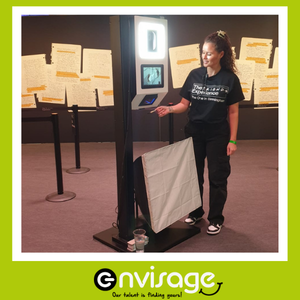
Guided or facilitated experiences. Staff running a specific activity station, photo opportunity, or hands-on moment that needs someone actively managing pace, queueing, and guest turnover, not just standing nearby.
Narrative or informational hosting. Staff who can talk knowledgeably and engagingly about the specific story, product, or exhibit in front of them, adjusting the level of detail depending on who’s asking.
Most large interactive activations use a mix of all four, often within the same team.
The Skills That Set Interactive Staff Apart
A handful of skills come up consistently across interactive roles, regardless of the sector or activation:
- Improvisation. The ability to respond naturally to an unexpected question or an unplanned moment, without breaking the flow of the experience.
- Consistency. Holding the same energy, character, or tone for the fiftieth guest of the day as for the first.
- Technical confidence. Operating equipment smoothly enough that the technology never becomes a visible obstacle to the experience.
- Reading the room. Adjusting pace and depth of interaction to match each guest or group, some want a quick moment, others want to linger and ask questions.
These are learned, practised skills, not personality traits that show up automatically in an outgoing member of staff. A specialist agency should already be developing them across bookings, so they arrive built-in rather than being figured out live on your activation.
Where You’ll Find Interactive Event Staffing in Use
Interactive staffing shows up wherever an event is built around guests doing or experiencing something, rather than simply attending:
- Exhibitions and trade shows, particularly stands built around live demonstrations or technology.
- Brand activations and experiential campaigns, where the whole point is a memorable, hands-on moment
- Pop-up and touring experiences, where a consistent story or world needs to be delivered the same way to every visitor
- Product launches, where staff are often the first people to actually demonstrate something new to the public
The common thread across all four is that the experience depends on the staff doing something, not just being somewhere.
Why This Matters When You’re Booking Staff
It’s easy to book “event staff” as a single category and assume any experienced team can adapt on the day. For an activation with a genuine interactive element, that assumption is where the gap usually opens up. A brief written for standard event staff presentable, reliable, good with guests doesn’t specify the improvisation, technical confidence, or character consistency an interactive role actually needs. The staff who arrive may well be capable people, just not necessarily trained for this specific kind of work.
Naming the staffing type correctly at the booking stage is a small step that prevents a much bigger mismatch later.
How Envisage Approaches Interactive Staffing
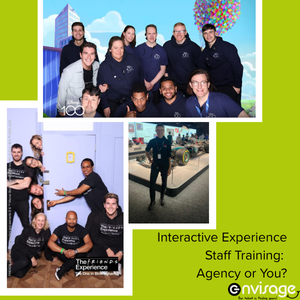
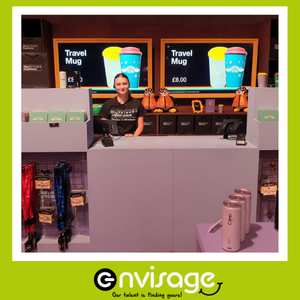
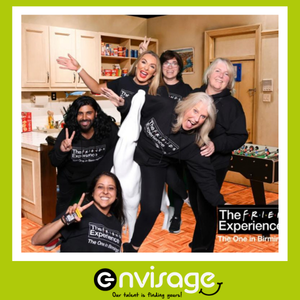
On the Friends Experience at the NEC Birmingham, an immersive pop-up built around a well-loved television show, our team’s role went well beyond welcoming visitors. The experience ran from July 2024 to September 2024 with 9,135 staffing hours that had a staff attendance of 99.8%, our staff worked across guest-facing interactive points, managed the flow of a retail area built around high visitor volume, and kept the overall atmosphere of the experience consistent for every group moving through it, all of which depended on staff who could hold a role, not just fill one.
This is the standard our immersive and interactive event staffing teams are trained to before they’re ever placed on a booking: the improvisation, consistency, and technical confidence covered above, ready to be built on with your brand and content specifics.
A Quick Checklist – Is This the Right Type of Staffing for Your Event?
Interactive staffing is likely the right call if:
- Guests are meant to actively do, try, or operate something, not just observe it.
- Any part of the experience depends on a consistent character, tone, or story being held across the day.
- There’s a technical element: a simulator, screen, or piece of equipment a guest will use directly.
- The activation includes a facilitated moment, such as a guided activity or photo point, that needs active pacing.
If none of these applies, standard event or promotional staffing may well cover what you need, worth confirming with your agency either way before you book.
Next Steps
Interactive event staffing is a distinct discipline, not a more energetic version of standard event staffing. It calls for people trained specifically in improvisation, consistency, and technical confidence, booked and briefed with that in mind from the start. Once you know that’s the type of staffing your activation needs, the next question is naturally who’s responsible for training that staff: the agency, you, or both.
If you’re planning an activation built around genuine guest interaction, see how Envisage approaches immersive and interactive event staffing.
Related Posts