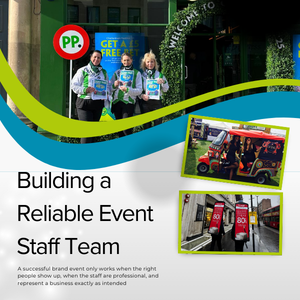
How to Build a Reliable Event Staff Team A successful brand event only works when…
The Ultimate Checklist for Hiring People for a Live Event
Hiring the right people can make or break a live event. Whether you are organising a corporate function, public festival, brand activation or exhibition, the quality of your event staff directly affects guest experience, safety and overall success.
Many organisers focus heavily on venue, production and marketing, but underestimate the importance of structured staffing decisions. Knowing how to hire event staff properly is not simply about filling roles. It is about understanding what your event requires and matching the right people to the right responsibilities.
This practical checklist will help you approach the process with clarity and confidence.
Why Hiring the Right Event Staff Matters
Live events are dynamic environments. Guests move unpredictably, schedules shift and challenges arise without warning. Professional event staff provide the structure and reassurance that keep everything running smoothly.
From promo staff engaging with visitors at an exhibition stand to marshals overseeing crowd movement, every role contributes to the bigger picture. When staffing is handled thoughtfully, problems are resolved quickly, and the event feels calm and well-managed.
Step 1: Define Exactly What Your Live Event Needs
Before you hire event staff, take time to outline your requirements clearly.
Ask yourself:
- Is this a public event, a corporate event, or a private function?
- Will you need promotional interaction or primarily operational support?
- Is crowd management a factor?
- Are there restricted areas that require supervision?
- Is the event indoor, outdoor or part of a larger exhibition?
A detailed brief prevents confusion later. For example, promo staff at an exhibition will require strong communication skills and confidence approaching visitors, whereas marshals and stewards will need situational awareness and authority.
Clarity at this stage saves time and avoids mismatched expectations.
Step 2: Identify the Different Types of Event Staff Required
Live events often require multiple staffing categories. It is rarely a single role that ensures success.
Promo Staff for Brand Engagement
Promo staff are essential at exhibitions, product launches and experiential marketing events. Their role is to attract attention, initiate conversations and represent your brand professionally.
Look for individuals who are confident, articulate and comfortable engaging with diverse audiences.
Marshals and Stewards for Crowd Management
Marshals and stewards play a vital role in maintaining order and ensuring safety. They manage entry points, direct foot traffic and monitor restricted areas.
For larger public events or festivals, trained marshals are particularly important to support structured crowd management planning.
Event Crew for Operational Support
Event crew often work behind the scenes, assisting with setup, logistics and general support. They ensure equipment is in place and spaces are prepared before guests arrive.
While less visible, their contribution is critical to the event’s foundation.
Step 3: Check Experience and Professionalism
Experience within live environments matters. Events can be fast-paced and unpredictable, and staff need to respond calmly under pressure.
When reviewing candidates or agencies, consider:
- Previous experience in similar events
- Reliability and punctuality
- Ability to follow instructions
- Professional presentation
For exhibition staff and promo staff in particular, communication style and brand alignment are essential. For marshals and stewards, composure and situational judgement are key qualities.
Step 4: Confirm Training and Compliance
Safety and compliance should never be an afterthought.
If your event involves large crowds, public spaces or controlled access points, ensure marshals and stewards have appropriate training. They should understand basic safety procedures, escalation protocols and reporting structures.
Even for smaller corporate events, staff should be briefed properly on emergency procedures and venue rules. This protects both guests and organisers.
Step 5: Create Clear Role Descriptions
Ambiguity is one of the most common causes of on-site confusion.
Each member of your event staff team should know:
- Their exact location
- Their shift times
- Who they report to
- What decisions they are authorised to make
- How to escalate concerns
Providing written role summaries in advance helps staff prepare and arrive confident. It also supports consistency across the team.
Step 6: Plan for Briefings on the Day
No matter how experienced your team is, a pre-event briefing is essential.
Use this time to:
- Reinforce the event objectives
- Clarify brand messaging for promo staff
- Review crowd management points with marshals
- Confirm communication channels
- Highlight any schedule changes
A structured briefing aligns everyone and reduces uncertainty before guests arrive.
Step 7: Consider Appearance and Brand Alignment
At exhibitions and corporate events, your event staff often represent your brand as much as your marketing materials do.
Consider dress code, tone of voice and overall presentation. Promo staff, especially, should reflect the style and values of your organisation.
Consistency in appearance and behaviour reinforces professionalism and strengthens guest perception.
Step 8: Build in Backup and Flexibility
Even the most carefully planned live event can face last-minute changes.
Have contingency plans in place:
- Reserve staff for larger events
- Clear communication channels for replacements
- Flexible role allocation if attendance fluctuates
Building resilience into your staffing plan ensures that small disruptions do not escalate into larger problems.
Step 9: Evaluate After the Event
The hiring process does not end when the event finishes.
Review performance by asking:
- Did the event crew meet operational expectations?
- Were promo staff effective in engaging visitors?
- Did marshals manage crowd flow smoothly?
- Were there any communication gaps?
Feedback strengthens future hiring decisions and improves overall event planning strategy.
Common Mistakes to Avoid When Hiring Event Staff
While this checklist focuses on best practice, it is also useful to recognise common oversights:
- Hiring too few staff to manage peak times
- Underestimating the importance of trained marshals
- Skipping formal briefings
- Assuming exhibition footfall will be evenly spread
- Leaving staffing decisions until the last minute
Proactive planning prevents reactive decision-making.
Bringing It All Together
Hiring people for a live event is about more than filling positions. It is about building a team that supports your objectives, protects your reputation and enhances guest experience.
Whether you are planning a busy exhibition stand, a public festival or a corporate launch, thoughtful staffing decisions provide structure and reassurance throughout the event.
Using a clear checklist approach helps you hire event staff strategically rather than reactively. It ensures your promo staff are engaging, your marshals are confident and your event crew are reliable.
When the right people are in the right roles, live events feel organised, professional and controlled from start to finish.
Strong Event Staff Create Strong Events
Successful live events are rarely remembered for flawless spreadsheets. They are remembered for smooth organisation, positive interactions and a sense of confidence throughout the experience.
Investing time in how you hire event staff, from promo staff at exhibitions to marshals managing crowds, is one of the most practical steps you can take towards delivering a well run event.
With the right preparation and the right team, everything else becomes easier.
Related Posts