Hiring a Crowd for Big Brand PR Marketing: Why It Works and What It Takes…
The Power of Social Proof: Why Crowds Matter in PR Campaigns
One of the challenges facing PR professionals today is that campaigns are judged long before anybody reads the press release. In many cases, they are judged before a journalist has spoken to a spokesperson, before an article has been published and before a single key message has been absorbed by the audience. The first judgement is usually visual and occurs within seconds.
When images from a product launch, public activation or PR stunt begin appearing online, people instinctively assess what they can see. They look at the setting, the atmosphere and, perhaps most importantly, how other people appear to be responding. This is not a new behaviour. Human beings have always looked to others’ reactions when deciding what deserves their attention. The difference today is that those reactions are often captured instantly through photography, video, and social media content and are shared around the world within minutes.
This creates an interesting challenge for brands. They can invest significant time and resources in developing a campaign, refining the messaging, and creating a compelling visual concept, yet if the surrounding atmosphere feels flat or underwhelming, the audience may take away a very different impression from the one intended. The product itself may be excellent and the campaign strategy entirely sound, but perception is shaped by much more than the product alone.
For PR professionals, this is where the discussion is often less about what is being promoted and more about how the promotion is experienced. A launch is rarely judged in isolation. It is judged within the context of the people surrounding it. Was there interest? Did people engage? Did it attract attention? Did it feel like something worth talking about? These are the questions that sit quietly behind many client conversations, even if they are not always expressed directly.
Why Media Coverage Depends on More Than the Story Alone
There is a common assumption that strong stories naturally create strong coverage. While there is certainly truth in that, anyone who has worked in public relations for any length of time knows that media coverage is rarely driven by narrative alone. Journalists, picture editors and content creators are constantly searching for visual cues that help communicate the significance of a story quickly and effectively.
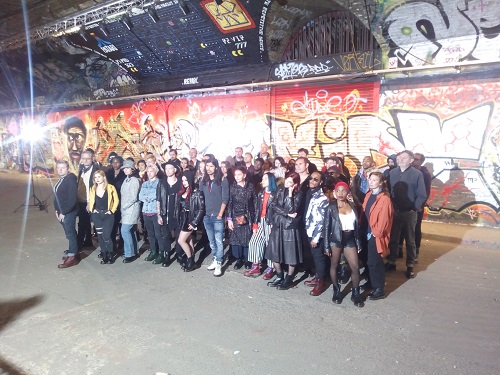
A product launch attended by interested members of the public immediately feels different from one in an empty space. A public activation where people are visibly engaging with the experience feels more relevant than one where participation appears limited. Even when the underlying story remains exactly the same, the visual evidence surrounding it can dramatically influence how it is perceived.
This is particularly important because modern audiences consume information at remarkable speed. A photograph on a news website, a social media post, or a video clip shared online may hold attention for a matter of seconds. During that brief moment, people are making subconscious decisions about whether the story matters. One of the strongest signals they use is the behaviour of others.
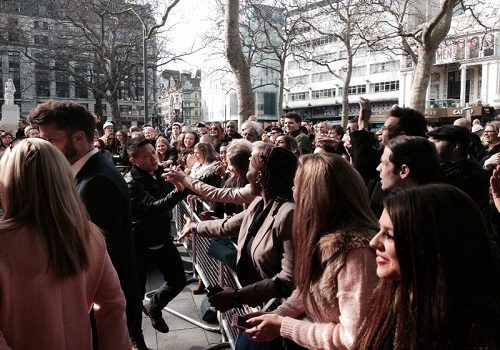
When people see a crowd gathering, they instinctively assume something of interest is taking place. When they see a queue forming, they assume demand exists or if they see people interacting positively with a brand experience, they become more inclined to believe the experience is worth their attention. None of this requires conscious thought. It is simply how people process information.
For PR professionals, understanding this behaviour is crucial because successful campaigns are often built around creating moments that feel larger than the sum of their individual parts. The crowd does not replace the story, but it amplifies it. It provides context, energy and social validation in a way that even the strongest press release cannot achieve on its own.
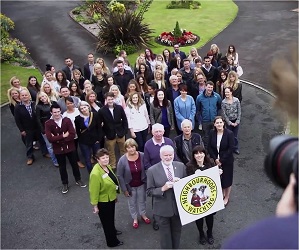
The Pressure to Deliver Results Has Never Been Greater
Modern public relations operates in an environment where success is measured from multiple directions at once. Clients expect media coverage, but they also expect social media engagement, shareable content and evidence that a campaign generated meaningful public interest. The days when coverage alone was enough have largely disappeared. Every activation now exists within a wider ecosystem of digital content, audience participation and online discussion.
This creates significant pressure for PR teams because campaigns often have only a limited window in which to make an impact. The photographs taken during the first hour of an event may become the images that define the entire campaign. The video clips captured early in the activation form the basis of future coverage, social content and marketing materials. There is very little opportunity to revisit the moment and create a stronger first impression later.
As a result, experienced PR professionals increasingly focus on the conditions surrounding a campaign rather than simply the campaign itself. They think carefully about what photographers will see through their lenses, how video content appears when viewed online and whether the atmosphere on the day will reinforce the narrative they are trying to create.
This is not about manufacturing excitement where none exists. It is about recognising that excitement needs to be visible. A successful campaign may generate interest naturally, but if that interest is not apparent within the imagery and content being captured, much of its potential value can be lost. The audience cannot respond to enthusiasm they cannot see.
The most successful public activations often understand this instinctively. They create environments where participation becomes part of the story itself. People are not simply observing the campaign; they are contributing to its visibility, helping shape the atmosphere and reinforcing the sense that something noteworthy is taking place.
Why People Remain the Most Powerful Marketing Asset
Despite technology growth, artificial intelligence and digital communication, people remain the single most influential element in how brands are perceived. Consumers continue to trust people’s reactions more than they trust advertising messages. They continue to be influenced by visible popularity, public engagement and social proof in ways that marketing theory has understood for decades.
This is why the crowd behind a product often matters just as much as the product itself. The crowd provides evidence. It demonstrates interest. It reassures observers that the campaign has connected with real people rather than existing as a carefully managed marketing exercise.
For PR professionals tasked with creating memorable campaigns, this understanding has become increasingly important. Success is no longer defined solely by the product being launched or the message being communicated. Success is also defined by how that moment is experienced, captured and shared by the audience surrounding it.
When people look at a photograph from a launch event or watch a video from a public activation, they are not only evaluating the product. They are evaluating the reaction. They are asking themselves whether this was something people cared about, whether it generated attention and whether it felt culturally relevant enough to deserve their own interest.
That is why the crowd has become far more than a background detail. In many modern campaigns, it is an essential part of the story being told. The product may provide the reason for the event, but the people surrounding it often provide the proof that the event mattered in the first place.
The Crowd Is Often the Difference Between a Campaign and a Moment
Products launch every day. Campaigns go live every day. Brands spend considerable sums trying to attract attention every day.
What people remember are moments.
For PR professionals, creating those moments has never been solely about the product being promoted. It has always been about the reaction it generates. The photographs that secure coverage, the videos that gain traction and the campaigns that spark conversation nearly always have one thing in common: visible human engagement.
The crowd does not replace the story, but it helps validate it. It signals interest, creates atmosphere and provides the social proof that modern audiences instinctively look for before deciding whether something deserves their attention.
When planning a launch, activation or media event, it is easy to focus on what will sit at the centre of the campaign. The more revealing question may be what will surround it.
Because when the final images are published, the audience will not simply be looking at the product.
They will be looking at the people looking at the product.
And that difference can be what transforms a well-executed campaign into a genuinely memorable one.
Related Posts