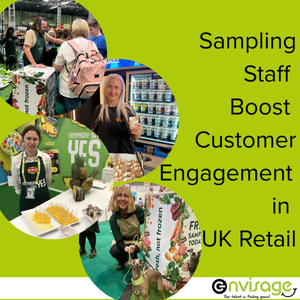
How Sampling Staff Boost Customer Engagement in UK Retail In today’s fast-moving retail sector, customer…
How Do I Create Buzz for a Product Launch? A Brand’s Guide to Energy, Attention and Social Proof
Every launch has the same nervous final fortnight. The product’s finished, packaging’s signed off, retailers are briefed, the media plan is locked in, and someone in the marketing team finally asks the question that’s been sitting there the whole time: how do we actually get people talking about this?
Not awareness. Not impressions. Talking. The kind of reaction that gets people queuing, filming, posting, and telling a friend before a single paid ad has even gone live.
Here’s the thing most brands eventually learn the hard way: buzz isn’t something you buy; it’s something you build, and it tends to start in person, not online. Digital channels are brilliant at amplifying a moment, but they need a moment to amplify in the first place. That moment is usually human: a small crowd watching someone react to a product for the first time, a stranger tasting something new and grinning, a queue that wasn’t there ten minutes ago. Moments like that are created on the ground by people, which is exactly why promotional and sampling staff sit at the centre of so many launch strategies, not on the edge.
This piece looks at what buzz actually involves, why face-to-face activation still does the heaviest lifting, and what promotional and sampling teams specifically bring to a launch day.
Buzz Isn’t the Same Thing as Reach
It’s an easy mix-up. Reach tells you how many people saw your ad. Buzz tells you how many people are talking about your product because of something that happened to them, not because they were shown an advert.
Three things tend to be present whenever genuine buzz exists:
1. Energy. A real sense that something’s happening right now, in this place, and you’d be missing out by not joining in.
2. Attention. Interest that’s freely given rather than forced through interruption.
3. Social proof. Visible signs that other people are already enjoying and vouching for the product.
None of those three things come from a billboard or a scheduled social post on their own. They come from people interacting with people, in real places, at the right moment. That’s the underlying logic behind experiential marketing and sampling campaigns, and it’s why most launches now lead with face-to-face activity before paid and organic media pick up the story afterwards.
Why Standing in Front of Someone Still Beats a Scroll-Past Ad
It’s tempting to assume that in-person marketing is the old-fashioned option in a digital-first world. In practice, the opposite tends to be true. As paid advertising gets noisier and easier to tune out, the launches that cut through are usually the ones giving people something to actually experience rather than something to swipe past.
A few reasons this still works so well at the launch stage:
* People can’t scroll past it. An ad disappears off-screen in half a second. A friendly, well-trained team member handing over a sample on the school run, or a stand that stops you in your tracks at the supermarket entrance, doesn’t.
* It produces content nobody had to ask for. People who genuinely enjoy something post about it without being prompted, and that kind of content tends to land harder than anything a brand produces about itself.
* It feeds information back in real time. A team on the ground hears the actual questions, hesitations and reactions of real customers, which is often more useful to a brand than weeks of post-launch analytics.
This is where the choice of team and how well they’re briefed starts to matter a great deal.
The Roles: Promotional Staff vs Sampling Staff
These two terms are used interchangeably more often than they should. In practice, they do different jobs, and a strong launch usually needs both.
Promotional Staff
Promotional staff are the public face of a brand at any activation, retail moment or event. Their job isn’t simply to be present; it’s to actively pull people into the brand’s world rather than waiting for the world to come to them.
In practice, that tends to mean:
* Approaching members of the public directly rather than waiting to be approached
* Explaining the product, its key features and the headline launch message clearly and consistently, shift after shift.
* Driving footfall toward a stand, stall or pop-up
* Handing out branded merchandise, vouchers or competition entries
* Capturing data such as email sign-ups or social follows, so the buzz has somewhere to go after the event ends.
* Creating moments worth photographing or filming, the kind of visual content that gives a launch a second life online
The best promotional staff have a mix of confidence and discipline. It takes nerve to approach a stranger in a busy shopping centre, and it takes consistency to stay sharp and on-message for an entire shift in a loud, distracting environment.
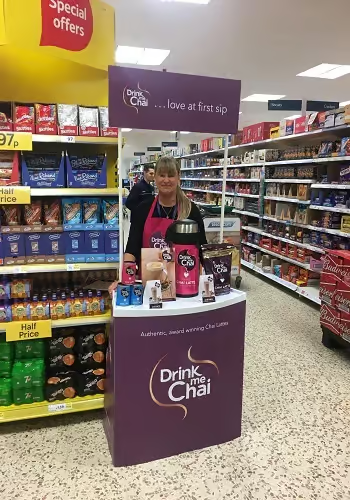
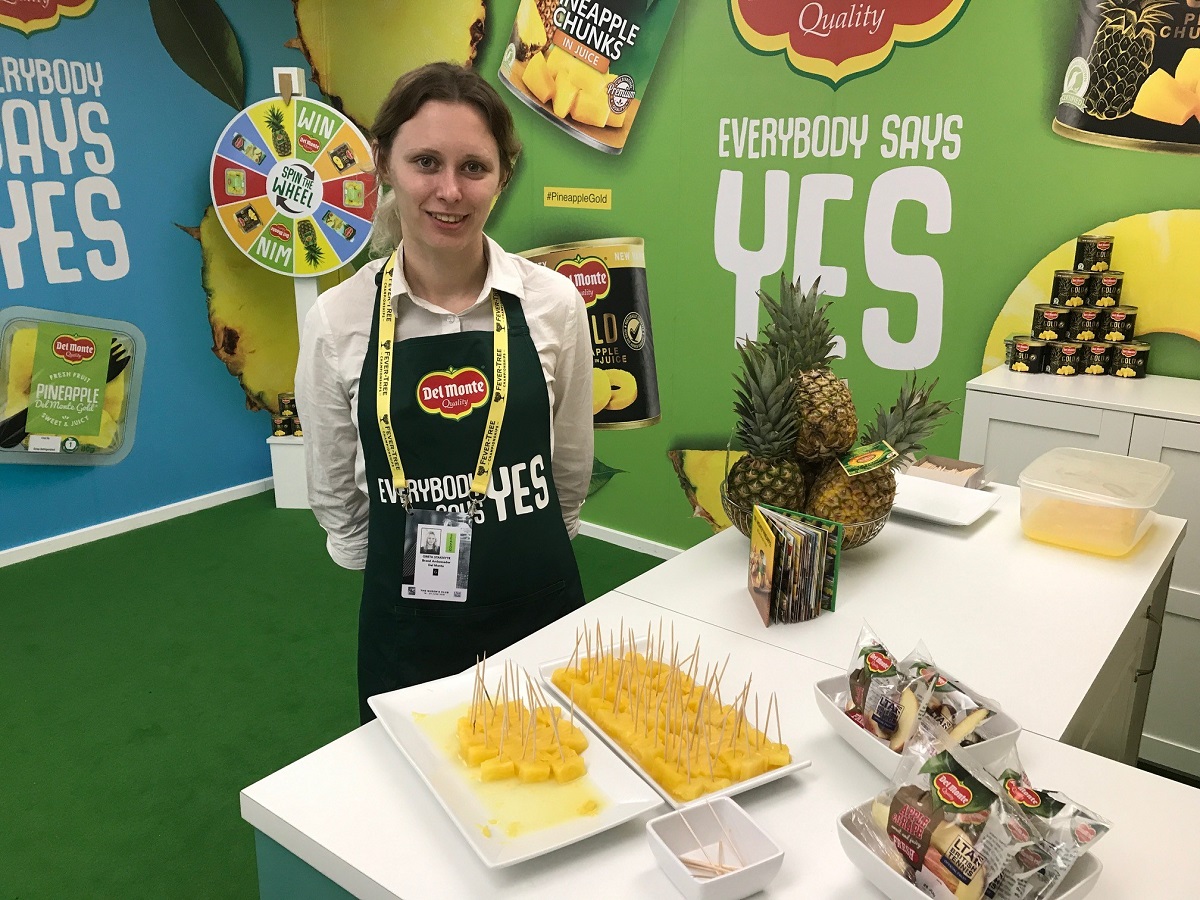
Sampling Staff
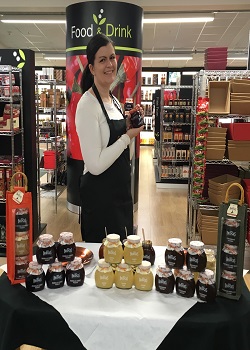
Sampling staff have a narrower but equally important job: getting the actual product into people’s hands (or mouths) and turning that first contact into real interest and word of mouth.
Their role typically covers:
* Preparing and handing out samples safely, with particular care around hygiene for food and drink products.
* Following allergen, food safety and licensing rules where they apply
* Pairing the sample with a short, clear message, the “why this matters” that turns a quick taste into a story worth repeating
* Targeting the right people rather than handing product to anyone who walks past
* Reading and reporting back on reactions, which gives a brand genuinely useful feedback before or after launch
* Managing stock levels, waste and any compliance paperwork through the activation
Sampling works because it removes risk from the customer’s side of the transaction. People are naturally wary of trying something unfamiliar, especially anything sitting at a premium price point. A free sample, handed over well and explained clearly, gets past that hesitation almost instantly. Trial builds trust, and trust is what people end up repeating to friends and family later that day.
How the Two Roles Work Together on Launch Day
On most activation days, promotional and sampling staff aren’t working in isolation; they’re running the same campaign from two different angles.
Take a new snack brand launching in a busy shopping centre as an example. Promotional staff create the initial pull, starting conversations with shoppers and steering them toward the stand. Sampling staff then handle the actual moment of trial, putting the product directly into people’s hands and talking through flavour or ingredients as they taste it. Once that interaction’s done, promotional staff step back in to capture data, point people toward social channels, or invite them into a competition.
What that produces isn’t just a stack of empty sample trays by the end of the day. It’s:
* A visible crowd, which signals to everyone walking past that something worth investigating is going on.
* Real product trial, which builds confidence faster than any written claim ever could.
* Content people choose to post themselves, because they want to, not because they were asked to.
* A list of contacts the brand can follow up with after the event.
* Genuine, real-time feedback that can sharpen messaging for the rest of the campaign.
That’s what buzz actually looks like in practice: energy that’s felt in the room first, then carried outward through conversation and content long after the stand’s been packed away.
What Separates a Strong Activation Team from an Average One
Putting people in a location isn’t enough on its own; the quality of the team decides whether an activation actually works. The campaigns that perform best tend to share a few things:
* Genuine brand fit. Staff who look, sound and behave in a way that matches the brand’s actual audience, not a generic idea of “promo staff”
* Proper briefing. A clear, consistent message and real product knowledge, so every single conversation tells the same story.
* Natural approachability. The confidence to open a conversation with a stranger, paired with the warmth to make that stranger comfortable, saying yes.
* Compliance awareness. Particularly critical in food, drink and other regulated categories, where allergen handling, age checks and hygiene standards simply aren’t optional
* Reliability. Punctual, professional staff who keep representing the brand well even during the quieter stretches of a long shift
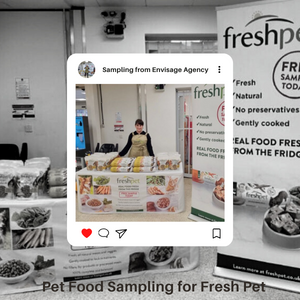
This is the standard we hold our own teams to when staffing launches and sampling campaigns. We’ve supplied experienced promotional and sampling staff for brands across food, drink and lifestyle categories, including Freshpet, Delmonte and vape brands bringing new product lines to market, each with very different audiences and regulatory demands, but all needing the same fundamental thing: a team that could be trusted to represent the brand properly and turn footfall into real engagement.
Putting a Launch Buzz Strategy Together
If you’re staring down a launch date and asking how to build genuine buzz around it, here’s roughly how that planning tends to break down in practice:
1. Find your moment. Where does your audience naturally gather, and what’s the best window to catch them with enough time to actually engage?
2. Work out whether you need promotional staff, sampling staff, or both. Sampling suits trial-led products especially well. Promotional staff are stronger for awareness, data capture and crowd-building. Most launches benefit from running both together.
3. Brief properly. Your team is your brand’s voice for the day, so the clearer that brief is, the more consistent the buzz will feel.
4. Build in content capture. Buzz that nobody filmed or photographed tends to vanish the moment the stand comes down, so plan for content from the outset rather than as an afterthought.
5. Capture the data and the feedback. The conversations, contacts and reactions gathered on the day are often just as valuable as the trial itself.
Buzz rarely happens by accident, and it almost never comes from advertising alone. It comes from real people having a genuinely good experience with a product, then telling others about it unprompted. Promotional and sampling staff are what make that experience possible in the first place. Get that team right, and the rest of the buzz tends to take care of itself.
Planning a product launch or sampling campaign? Get in touch with our team to talk through your brand, your audience, and the right activation team to bring your launch to life.
Related Posts